
ChoiceMortgages Guide to First-Time Buyer Mortgages
Buying your first home? This complete UK guide explains first-time buyer mortgages, deposits, affordability, schemes, and how to get approved. ChoiceMortgages UK are here to help you every step of the way. If you need any specific advice or want to get the ball rolling with your mortgage application, please call our team on 01780 480600.
Contents:
- Introduction: Buying Your First Home as a First-Time Buyer
- What is a First-Time Buyer?
- How Do First-Time Buyer Mortgages Work?
- How Much Deposit Do First-Time Buyers Need?
- How Much Can a First-Time Buyer Borrow?
- Credit Scores & Credit History for First-Time Buyers
- Types of Mortgages Available to First-Time Buyers
- UK Government Schemes for First-Time Buyers
- The Full First-Time Buyer Mortgage Process Explained
- Costs First-Time Buyers Need to Budget For
- Common First-Time Buyer Mortgage Mistakes to Avoid
- Why Use an Independent Mortgage Advisor as a First-Time Buyer?
- First-Time Buyers in Stamford: Local Considerations
- First-Time Buyer FAQ
- First-Time Buyer Next Steps
Introduction: Buying Your First Home as a First-Time Buyer
Buying your first home should be exciting. But finding the money for a deposit and finding an affordable home in an area you’d like to live can be daunting. Rising house prices, increased interest rates, and a sluggish economy have made this all the more difficult in recent years.
However, with the right guidance and support, taking your first step on the property ladder could be easier than you might expect. At ChoiceMortgages UK we have been helping first-time buyers purchase homes for decades. Our team has a wealth of experience navigating the requirements of mortgage lenders. We’re here to help guide you through the process of buying your first home.
In this guide we’ll cover all the key information you need to know when setting out on this journey. Of course, your circumstances are unique to you, so when it comes to specific details, you’ll need to discuss these directly with our team.
One thing you need to know from the outset is that as independent mortgage advisors we have access to the full market. We’re not tied to any specific lenders, so we can find the best deals for you and your particular requirements. This sets us apart from many high street lenders, banks and building societies. If you’re already in conversation with a broker, it’s always worth checking whether they offer truly independent mortgage advice. It could save you a lot of money in the long run!
What Is a First-Time Buyer?
HMRC defines a first-time buyer as follows:
In order to count as a first-time buyer, a purchaser must not, either alone or with others, have previously acquired a major interest in a dwelling or an equivalent interest in land situated anywhere in the world, regardless of the value of that interest.
In simple terms, this means you’ve never owned a property, either in part or in full, outright or via a mortgage or other loan. Provided you meet this criteria you qualify as a first-time buyer. First-time buyers benefit from certain incentives and schemes aimed at making it easier to get onto the housing ladder.
For example, as of time of writing, first-time buyers pay much less Stamp Duty than other buyers. First-time buyers may also benefit from better mortgage rates, lower fees and cashback incentives, compared to those who have previously owned property.
If you’re buying a property with someone else, one thing to note is that if either of you have owned property before neither of you will be treated as first-time buyers. This will have an impact on Stamp Duty, mortgages available to you and other incentives so please make your broker aware of this as soon as you can.
How Do First-Time Buyer Mortgages Work?
A mortgage is a long-term loan specifically designed for property ownership. The lender makes the money available for the purchase of the property. The loan is then paid back by the mortgage holder, along with any interest charged on the loan, over an agreed period of time.
For first-time buyers purchasing a property in their 20s or early 30s mortgage terms can usually be somewhere between 25 and 40 years. This is the maximum length of time over which the loan is repaid.
Most mortgages are capital repayment mortgages. This is where the value of the loan (equivalent to the cost of the property) is paid off a little at a time, month by month, along with the interest as a single payment. Alternatively, and in rare circumstances, an interest-only mortgage may be arranged. In this instance, the interest is repaid monthly, with the initial value of the loan being repaid by the end of the term. This is usually done through savings or investments.
Mortgage repayments are made monthly by Direct Debit. When arranging your mortgage your broker will be able to let you know what the cost of your repayments will be. If you’re able to afford more than the contractual repayment amount, then you may be able to ‘over-pay’. This is a helpful way of reducing the term of your mortgage (the length of time over which it is paid) as well as the amount of interest paid in total. It can be a shrewd way of saving yourself money in the long term.
How Much Deposit Do First-Time Buyers Need?
This is one of the questions we’re most frequently asked. Generally, first-time buyers will require a deposit of 5% – 15% of the property value. This is money you will pay as lump sum at the outset.
The size of your deposit affects the mortgages available to you from different lenders, the interest rates and cost of monthly repayments. This is because the size of your deposit alters the loan-to-value (LTV) ratio.
The LTV ratio is the value of the loan compared to the property value, shown as a percentage.
If you take out a £255000 mortgage to buy a £300,000 home, the LTV is 85% – as you’ll need to borrow 85% of the home’s value in order to buy the property.
In short, the more you can put down as a deposit the more options you’ll have available to you.
We know it’s hard to save for a deposit, especially if you’re renting your existing home. However, there are a number of things you could do to make this easier, including:
- Opening a Lifetime ISA and benefiting from a 25% government bonus on your savings
- Set a savings goal and budget for saving each month
- Take in a flat mate, or find other ways to reduce your existing housing costs
- See if you’re eligible for any affordable housing schemes
- Ask family to help!
When arranging your mortgage you will be asked for proof of deposit. Depending on the source of funds being used for the deposit will determine whether bank statements are required, a gifted letter or an investment statement. Your broker will ask you for this information as and when required.
How Much Can a First-Time Buyer Borrow?
After deposit size, how much a first-time buyer can borrow is perhaps the next most frequently asked question!
Loan values are generally worked out as a multiple of your annual income. Lenders will also want to ensure that agreed repayments are actually affordable. For example, if your monthly income is £2,500 and your financial commitments are minimal, mortgage repayments of £800 month could be affordable. But if your income was £2,500 and your outgoings were £700 then your surplus income is significantly reduced, therefore likely to make the mortgage unaffordable.
If you’re applying for a mortgage as joint applicants, then financial paperwork for both applicants will be required. This ensures the lenders have the full picture of your household income and expenditure and can adjust the loan amount available accordingly.
Lenders will ask to see a variety of documents such as bank statements, proof of earnings and employment contracts in order to determine affordability.
For self-employed applicants providing proof of earnings can be more complicated. Generally, two years’ worth of business accounts are required as well as details of your personal finances and monthly outgoings. Your broker will discuss this in more detail with you.
As a rule of thumb, most first-time buyers can negotiate a loan value somewhere in the region of 4 to 5x salary.
If you use any online mortgage loan calculators, you’ll likely receive a range of values. This can be confusing and make it difficult to forecast how much you will be able to afford. To avoid disappointment, it’s always best to talk to a broker to get an actual figure before you start house hunting!
Credit Scores & Credit History for First-Time Buyers
When applying for a mortgage, lenders will look at your credit score and credit history to help them understand more about your financial situation.
Specifically, lenders will look at things like:
- Payment history
- Credit utilisation
- Financial stability
Some of the common issues facing first-time buyers include:
No Credit History
This can be a problem for younger buyers, even though they’ve done nothing wrong! No credit history means there’s no history of you taking out a loan or paying for something on credit in your own name, such as a phone contract.
Missed Payments
If you have taken out a loan in the past and missed payments, this may be visible on your credit history. This could be visible to a lender and give them cause for concern. Provided any missed payments were made may not adversely affect your mortgage application. It’s always best to be honest with your mortgage advisor about anything in your credit history which may cause problems as your application progresses.
Defaults or CCJs
This is more serious than a missed payment. A County Court Judgment (CCJ) is a court order stating you legally owe a debt. A CCJ is issued when you don’t respond to a creditor’s court claim, and it remains on your credit file for six years. This can severely damage your creditworthiness.
You can check your credit score for free.
Here are a few things you could do to improve your credit score and help your mortgage application:
- Check your credit report and seek to resolve any errors
- Register to vote – lenders often use the Electoral Role when performing background checks
- De-link from ex-partners and/or flatmates to avoid their credits score impacting yours
- Carefully manage your credit – if you have a credit card or overdraft try not to use more than 25% of the available credit and pay it off on time
- Close old and inactive bank accounts
- Avoid applying for any form of credit in the months before applying for a mortgage
- Improve your credit score with Experian Boost
Find out more about managing and improving your credit score.
Types of Mortgages Available to First-Time Buyers
There are various kinds of mortgages available to first-time buyers. These include:
Fixed-Rate Mortgages
A fixed-rate mortgage is a mortgage where the interest rate is fixed for a set period of time. This is generally 2, 3 or 5 years. Fixed-rate mortgages are a popular choice because the value of the monthly payment remains the same throughout the duration of the agreed fixed term. This gives certainty and can help household budget more effectively. At the end of the term, you will be invited to review the options available and secure a new product. Your broker can manage this for you.
Tracker or Variable Rate Mortgages
Tracker mortgages track the Bank of England Base Rate, plus a specific percentage. Like fixed-rate mortgages, the tracker rate is agreed for a certain length of time, often 2, 3 or 5 years. If the Bank of England Base Rate changes during the term this will be reflected in a change in the monthly cost of your mortgage, quite often the next month.
Discount Mortgages
A discount mortgage has an interest rate set below the lender’s Standard Variable Rate (SVR). In reality, most fixed-rate and tracker mortgages are below the SVR. However, for first-time buyers lenders sometimes offer better rates than to existing customers. It’s always worth checking with your broker to ensure you’re getting the best rates available to first-time buyers.
Short vs Long Fixed Terms
When arranging your mortgage, you’ll be offered terms for a fixed number of years. This is generally 2, 3 or 5 years. Depending on your circumstances you may choose to fix it for a shorter or longer period. Fixing for longer provides more certainty and makes it easier to budget. You’ll know exactly what you’re paying for years to come. Alternatively, fixing for a short length of time means you’re not tying yourself into an unfavorable interest rate for too long. Our team can guide and share from our experience, making a recommendation based on your circumstances, but how long to fix for is a decision only you can make.
UK Government Schemes for First-Time Buyers
First Homes Scheme
The First Homes Scheme helps first-time buyers purchase new-build homes at a discount of at least 30% to 50% off market value. The discount remains with the property for future buyers. It’s aimed at local buyers and key workers, making home ownership more affordable with smaller deposits and mortgages. Find out more here.
Shared Ownership
Shared Ownership allows first-time buyers to purchase a share of a home (usually 25–75%) and pay rent on the remaining portion. Buyers can increase their share over time through “staircasing.” This scheme reduces upfront costs and deposit size, making it easier to get onto the property ladder.
Lifetime ISA (LISA)
A Lifetime ISA helps first-time buyers save for a home with a 25% government bonus on contributions of up to £4,000 per year. The savings can be used towards a first home costing up to £450,000, provided the account has been open for at least 12 months. More about Lifetime ISAs here.
The Full First-Time Buyer Mortgage Process Explained Step by Step
Speaking to a mortgage advisor
A mortgage advisor will help you understand your options and find suitable deals based on your circumstances. They compare lenders, explain mortgage types, and guide you through eligibility criteria. Advisors can also highlight government schemes and help prepare your application to improve approval chances. At ChoiceMortgages UK our team has a wealth of experience guiding first-time buyers through this process. We’re here to answer your questions and support you as you buy your very first home!
Assessing affordability
The first step is understanding how much you can borrow. Lenders will consider your income, outgoings, debts, and credit history to assess affordability. Reviewing your budget early helps you set a realistic price range.
Mortgage Agreement in Principle
A mortgage ‘Agreement in Principle’ shows how much a lender may be willing to lend you, based on initial checks. It’s not a guarantee, but it strengthens your position when viewing homes or making offers, showing sellers that you’re a serious and prepared buyer. It also helps save time when speaking to various estate agents as it confirms your position to proceed.
Finding a property
Once you know your budget, you can start searching for a suitable property. Consider location, size, condition, and long-term needs. It’s always best to view multiple homes, research local prices, and factor in additional costs such as renovations before deciding. Taking a trusted friend or parent with you to view properties could be wise and help avoid problems down the line.
Making an offer
When you find the right property, you will need to submit an offer through the estate agent. This can be below, at, or above the asking price depending on market conditions. Your offer may be subject to mortgage approval and surveys, and negotiations may follow before acceptance.
Submitting the mortgage application
After your offer is accepted, a full mortgage application will be submitted by our team. This involves providing documents such as identification, proof of income and bank statements. The lender carries out detailed checks to confirm affordability, creditworthiness, and compliance with lending criteria.
Valuation and underwriting
The lender arranges a valuation to confirm the property is worth the agreed price. At the same time, underwriters assess your application in detail, reviewing finances and documents. They may request additional information before making a final lending decision.
Mortgage offer issued
If the lender is satisfied, they issue a formal mortgage offer. This confirms the loan amount, interest rate, term, and conditions. The offer is usually valid for six months (but not always) and is sent to you and your solicitor, allowing the purchase to progress.
Exchange of contracts
Exchange of contracts is when the sale becomes legally binding. You pay your deposit, agree a completion date, and commit to buying the property. After exchange, withdrawing would result in financial penalties, so all checks and mortgage arrangements must be finalised beforehand.
Completion day
On completion day, the remaining funds are transferred to the seller and ownership officially changes. You receive the keys and can move into your new home. Your mortgage repayments begin shortly after, marking the final step in the home-buying process.
Costs First-Time Buyers Need to Budget For
Alongside your monthly mortgage costs you will also need to budget for other costs associated with house purchases. Some or all of the following may apply, depending on your circumstances:
Our fees
Choicemortgages charge an administration fee of £595. This is payable on application and is non-refundable.
Mortgage fees
Mortgage fees include arrangement, booking, and valuation charges set by the lender. Some mortgages offer fee-free options, while others add fees to the loan. It’s important to factor these costs into your budget and compare deals based on overall cost, not just interest rates.
Solicitor / Conveyancing fees
Solicitor or conveyancing fees cover the legal work required to transfer property ownership. This includes searches, contracts, and liaising with lenders and sellers. Costs vary depending on property value and complexity and usually include additional charges such as local authority searches and Land Registry fees.
Survey costs
It’s often sensible to have a building survey undertaken before buying a property. A survey helps identify potential issues, future repair costs, and risks before you commit to buying the property. Survey costs vary by property size and level of detail required.
Stamp Duty costs
Stamp Duty Land Tax is a government tax paid when buying property in England and Northern Ireland above certain thresholds. At the time of writing, first-time buyers pay the following:
- 0% SDLT on properties up to £300,000
- 5% SDLT on the portion from £300,001 to £500,000
If the property you are buying costs more than £500,000 you will not qualify for first-time buyer relief and will be charged the standard rates.
Moving costs
Moving costs include hiring a removal company, transport, packing materials, and possible storage. Costs vary depending on distance, volume of belongings, and services required. Planning ahead, decluttering, and comparing quotes can help reduce expenses on moving day.
Furniture and setup costs
Furniture and setup costs cover essentials such as beds, sofas, appliances, and interior decoration, as well as utility setup and internet installation. These expenses can add up quickly, especially for first-time buyers, so budgeting for gradual purchases can help manage costs effectively.
Common First-Time Buyer Mortgage Mistakes to Avoid
Only speaking to one bank
High street banks will only offer their own mortgage products. Their advisors may be helpful, but their offering is limited so it’s always best to talk to an independent mortgage broker. Independent brokers have access to a wide range of mortgages so can secure the best deal for you, given your specific circumstances and on occasion may be able to access exclusive deals not available on the high street.
Ignoring future rate changes
Owning your own home provides a wonderful sense of security. Putting your roots down, providing space for your family to grow and investing in your future. It can be easy to forget that the property doesn’t actually belong to you – yet! As a mortgage holder you will be required to pay for your home over a long period. And each time your fixed term agreement ends you’ll need to negotiate a new deal. This could mean your monthly costs increase over time, depending on the Bank of England Base Rate and other factors. It’s always a good idea to plan ahead and budget for any changes in advance, to avoid nasty surprises. A mortgage broker should contact you before any mortgage product expiry date, thereby giving you time to review the options available.
Overstretching budgets
No doubt you’ll have heard or read the phrase “Your home may be repossessed if you don’t keep up with payments on your mortgage”. It’s important that you don’t default on your monthly mortgage payments. If you do, your lender will seek to recover the missed payment and will want to find out why you were unable to make a payment. Overstretching your household budget can land you in hot water and risk you losing your home. No lender wants to repossess a property, but they may be left with no other choice if you fail to keep up with repayments. If your circumstances change through redundancy or illness, it’s always a good idea to keep your mortgage lender informed. At ChoiceMortgages UK we can advocate on behalf of our clients, and we also offer a number of insurance products which could help you mitigate the risk of repossession should the worst happen.
Not getting advice early enough
You’ve been scrolling through Rightmove late at night. You’ve found the perfect property and put in an offer. Then you approach a mortgage broker… In the time taken to process your application your offer is gazumped. Or, worse still, you discover you can’t actually afford the property anyway and have to withdraw your offer.
Getting advice early can help avoid problems later on. Getting an agreement in principle is an important step, ensuring you can make an offer with confidence. Speaking to a mortgage advisor early is the best way to get your ducks in a row. We’ll help you get your paperwork straight, help you determine what’s affordable and talk you through the next steps.
Making large purchases before completion
Once you’ve had an offer accepted, and your mortgage application has been approved it can be tempting to rush ahead and start buying lovely new things for your home. Stop! Until completion, the property is not yet yours. You don’t want to end up with furniture which you can’t make use of. Best to take things slow, wait until you’ve got the keys and then start buying beautiful things for your lovely new home.
Why Use an Independent Mortgage Advisor as a First-Time Buyer?
Access to the whole mortgage market
As independent advisors we have access to the whole market. We’re not tied to a single lender so we can find the best mortgage products, reflecting your specific circumstances. This often means we have access to better terms than you’d find at a high street bank, saving you money. We also understand each lender’s criteria and if you have complex circumstances, know which lender is likely to consider your requirements.
Help with complex income or credit history
If you’re self-employed, have multiple incomes from different jobs or have a complex credit history we can help. Our team has lots of experience helping clients with these kinds of issues. We can help you get your paperwork in order and present it in a way which makes sense to the lenders. If you’ve been refused a mortgage in the past, don’t despair, there’s normally a solution. We’re here to guide you, from start to finish.
Saving time and stress
Applying for mortgages is time consuming and can be stressful. We’ll help save you time and stress by doing the legwork for you. We’ll speak to you in plain English, work with you to get your paperwork together and communicate with your clearly throughout the process.
Explaining the mortgage application process
From LTVs to AIPs there can be a lot of jargon used in mortgage applications. We promise to use plain English and explain each step of the process as your application progresses. There are no silly questions, and our team is always here to explain anything you’re unclear about.
Support from application to completion – and beyond!
ChoiceMortgages UK has worked with clients in Stamford, across Lincolnshire and around the UK for decades. From initial conversation to completion and beyond we’re here to support our clients. Many of our first-time buyers come back time and again, working with us as they upsize, improving their home, moving across the country, and even helping their children invest in their first property. We pride ourselves on creating lasting partnerships with our clients.
First-Time Buyer Mortgages in Stamford: Local Considerations
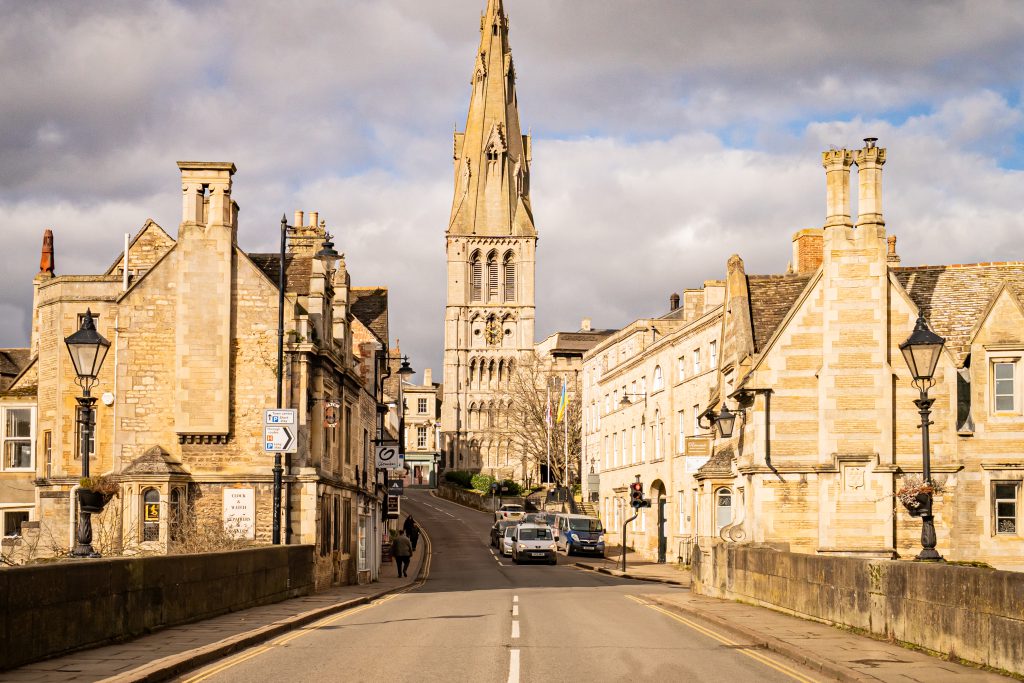
Due to relatively high local house prices it can be challenging for first-time buyers to purchase a home in Stamford. The current average house price is £338,000. This is over £100,000 more than the average asking price of a first-time buyer home nationally (according to Rightmove).
Our clients often consider the smaller villages nearby where buyers can get more for their money. Alternatively, towns further afield including Bourne, Peterborough, Corby and Spalding are often more affordable.
Frequently Asked Questions About First-Time Buyer Mortgages
What is a mortgage?
A mortgage is a loan used to buy a property. You borrow money from a lender (such as a bank) and agree to repay it over a set period (typically 25–40 years) plus interest. The property acts as security for the loan.
How much deposit do I need?
Most lenders require a deposit of at least 5–20% of the property’s price. A larger deposit usually means better interest rates and lower monthly payments.
What is an interest rate, and how does it affect my payments?
The interest rate is the cost of borrowing money. Higher rates increase your monthly payments and the total amount you repay over time. Rates can be fixed, variable, or a mix of both.
What’s the difference between fixed and variable rate mortgages?
- Fixed rate: Your interest rate stays the same for a set period, making payments predictable.
- Variable rate: Your rate can go up or down depending on market conditions, which can change your payments.
How much can I borrow?
Lenders assess your income, expenses, debts, credit score, and deposit size. The affordability assessment varies between lenders, with some considering a multiple of your annual income, whereas others consider the net income available for mortgage repayments.
What fees should I expect when getting a mortgage?
Common costs include arrangement fees, valuation fees, legal fees, survey costs, and if you do have an existing mortgage, possible early repayment charges. It’s important to budget for these in addition to your deposit.
What is a credit score and why does it matter?
Your credit score shows how reliably you’ve managed debt in the past. A higher score can help you qualify for better mortgage rates and improve your chances of approval.
What does “mortgage term” mean?
The mortgage term is how long you agree to repay the loan (for example, 25 years). Longer terms mean lower monthly payments, but more interest paid overall.
What happens if I miss a mortgage payment?
Missing payments can lead to fees, damage your credit score, and in serious cases risk repossession of your home. If you’re struggling, it’s important to contact your lender as soon as possible.
Should I use a mortgage broker?
A mortgage broker can compare deals from multiple lenders, explain your options, and help with the application process. They can be especially helpful for first-time buyers.
Final Thoughts & Next Steps for First-Time Buyers
Buying your first home can feel overwhelming, but it’s also exciting! Every first-time buyer’s circumstances are different, which is why getting tailored advice is so important. From understanding deposits and affordability to navigating mortgage types, government schemes, and the full buying process, being well prepared is vital.
Speaking to an independent mortgage advisor early can save you time, stress, and money. At ChoiceMortgages UK, we’ll help you understand what you can afford, find the most suitable mortgage from across the whole market, and guide you through every step. There’s no jargon, no pressure, just clear, honest advice designed around you.
If you’re ready to take the next step on your first-time buyer journey, or simply want to explore your options, our friendly team is here to help. Call ChoiceMortgages UK on 01780 480600 to book a free consultation and start your journey towards owning your first home with confidence.